Unified Energy Management Solutions (EMS / PPC / HPPC or MPPC)
Empower your renewable and hybrid power plants with iPLON’s EMS, PPC, and HPPC solutions—delivering intelligent grid compliance, real-time optimization,
and reliable energy dispatch, all unified under iPLON’s advanced Smart Energy Management ecosystem.
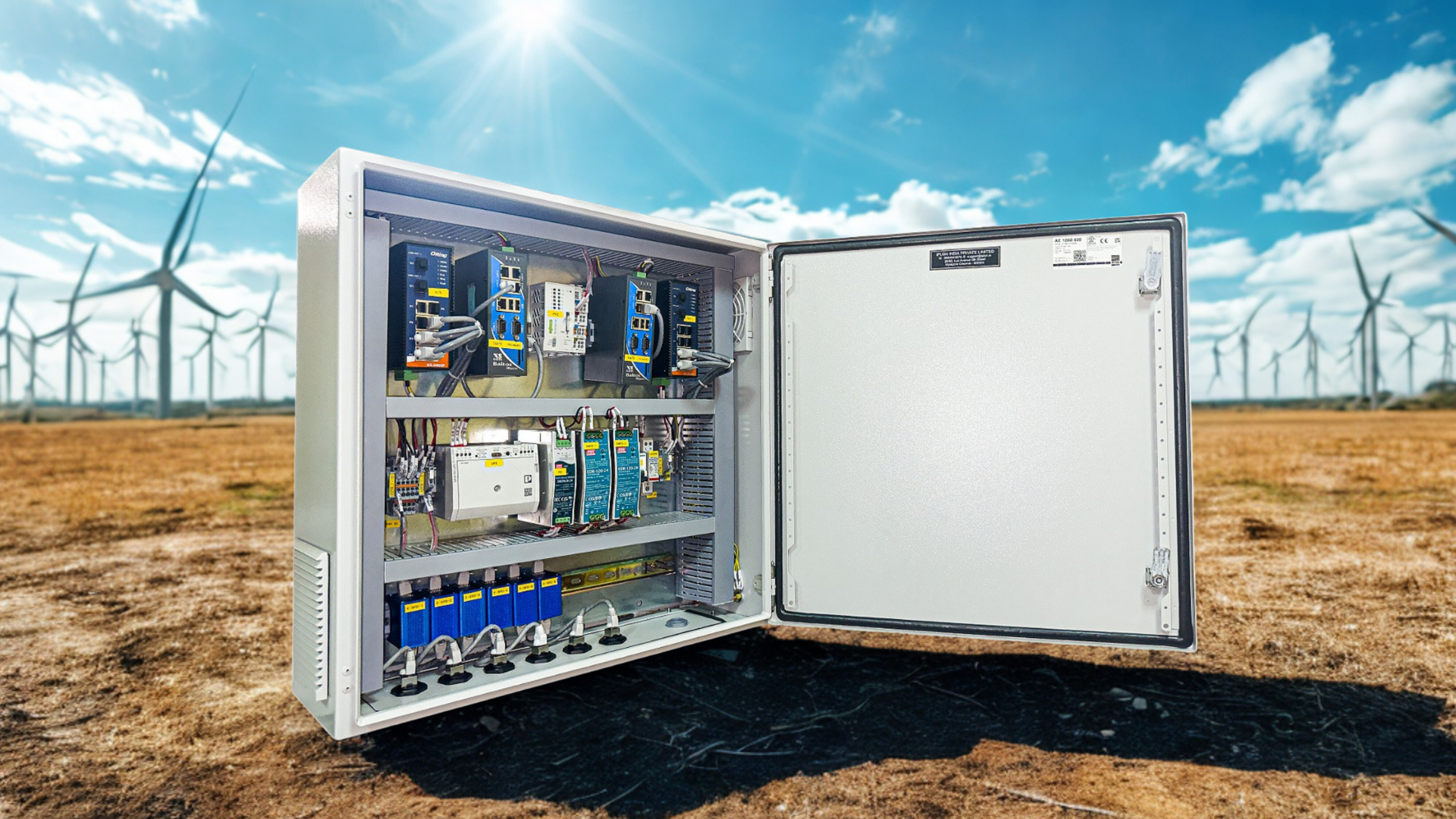
About EMS / PPC / HPPC:
Smart, Reliable, and Future-Ready Energy Management & Power Control Solutions
iPLON’s EMS, PPC, and HPPC form a comprehensive ecosystem designed to intelligently control, optimize, and stabilize large-scale renewable and hybrid power infrastructure. Tailored for utility-scale, hybrid, and C&I plants, these solutions provide precise grid synchronization, fast active–reactive power regulation, and coordinated dispatch across solar, wind, battery storage, and other grid-supporting assets, enabling Round-the-Clock (RTC), firm renewable power delivery.
With increasing renewable penetration, India’s grid demands smarter intelligence, coordinated control, and regulatory compliance. iPLON solutions meet these requirements, delivering stable operations, enhanced performance, and dependable lifecycle reliability across solar, hybrid, and RE+Storage assets.
Built in alignment with Indian Grid Code, CEA, SLDC, and DISCOM requirements, iPLON solutions combine high availability, redundancy, cybersecurity, and multi-OEM interoperability, ensuring plants operate efficiently, securely, and future-ready.
Contact UsUnified Energy Management System (EMS) Suite
Intelligent Control and Efficient Grid Integration for Every Renewable Asset
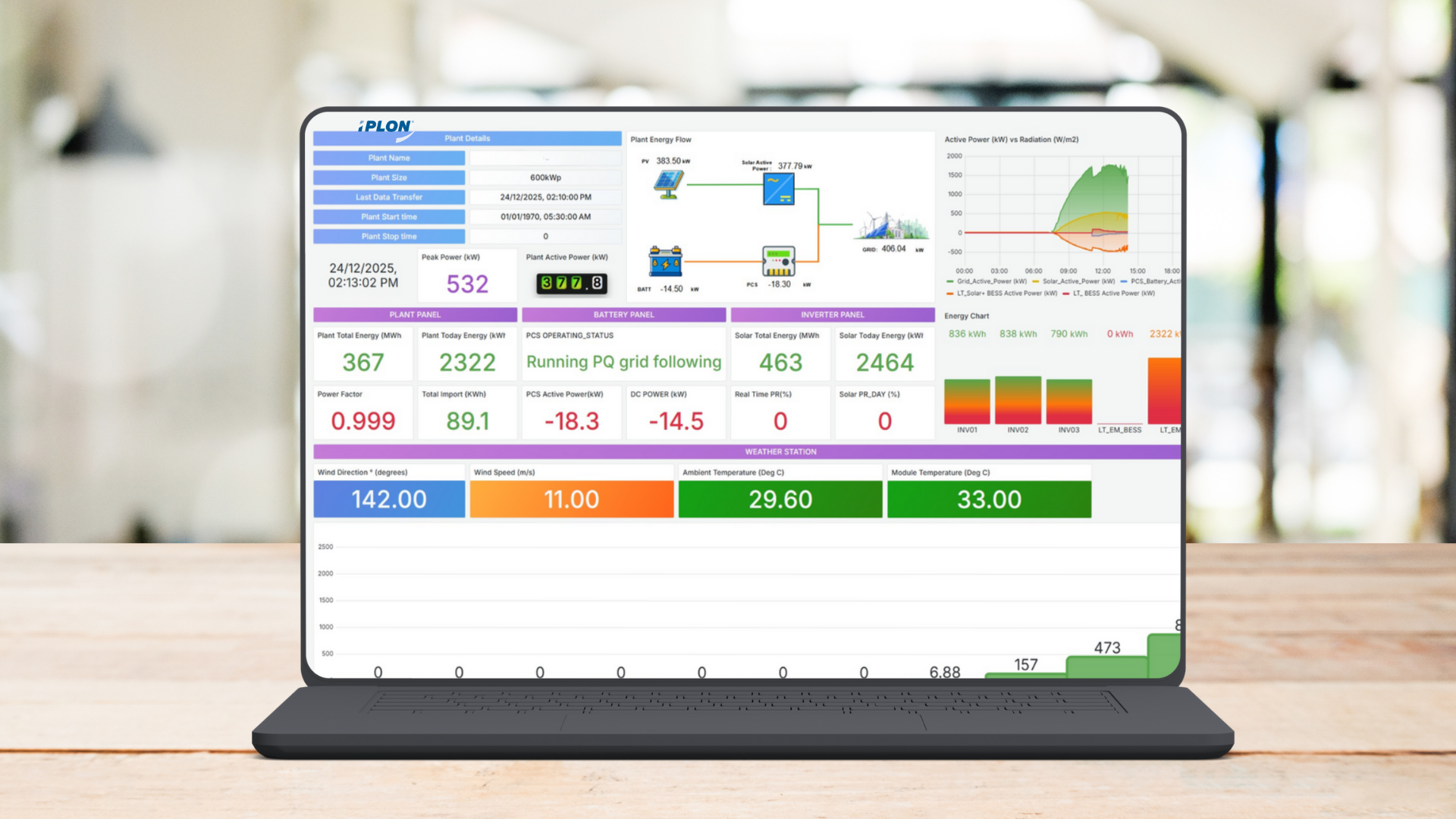
Energy Management System (EMS)
iPLON's EMS is an OEM-independent solution for real-time monitoring and control of PCS, BMS, and third-party systems, enabling intelligent energy management with ToD-based operation, peak shaving, and grid support
Intelligent Control and Efficient Grid Integration for Every Renewable Asset. For large or hybrid plants, it integrates PPC and HPPC (or MPPC) to provide centralized, grid-compliant control across all assets.
Key Features of EMS
Advanced Technical Specifications
Real-Time Monitoring & Visibility
Get complete oversight of all critical assets, including inverters, BESS, transformers, breakers, feeders, PPC/HPPC, STATCOM/SVG etc.
Intelligent Energy Optimization
Leverage advanced analytics for operational efficiency, optimized dispatch, and smarter energy management.
Seamless Grid Integration
Smoothly interface with SLDC, DISCOM, and transmission utilities for compliant, coordinated plant operations.
Centralized Power Control
Unified management of active/reactive power, rapid dispatch, and smart, grid-aware energy evacuation.
Scalable & Secure Communication
Ensures reliable, encrypted, and real-time data exchange across multi-vendor systems for unified plant-level control.
Forecast-Driven & ToD-Optimized Operations
Integrates generation and load forecasts to enable predictive charging/discharging, ToD-aligned scheduling, and proactive grid support decisions.
Power Plant Controller (PPC)
Grid-Synchronized Command & Control for Utility Renewable Plants
Grid-Synchronized Command & Control for Utility Renewable Plants
Power Plant Controller (PPC)
Grid-Synchronized Command & Control for Utility Renewable Plants.
The PPC is the primary grid-facing controller in a large-scale solar power plant, ensuring plants behave as stable, compliant, and predictable generating units in line with Indian Grid Code and SLDC directives.
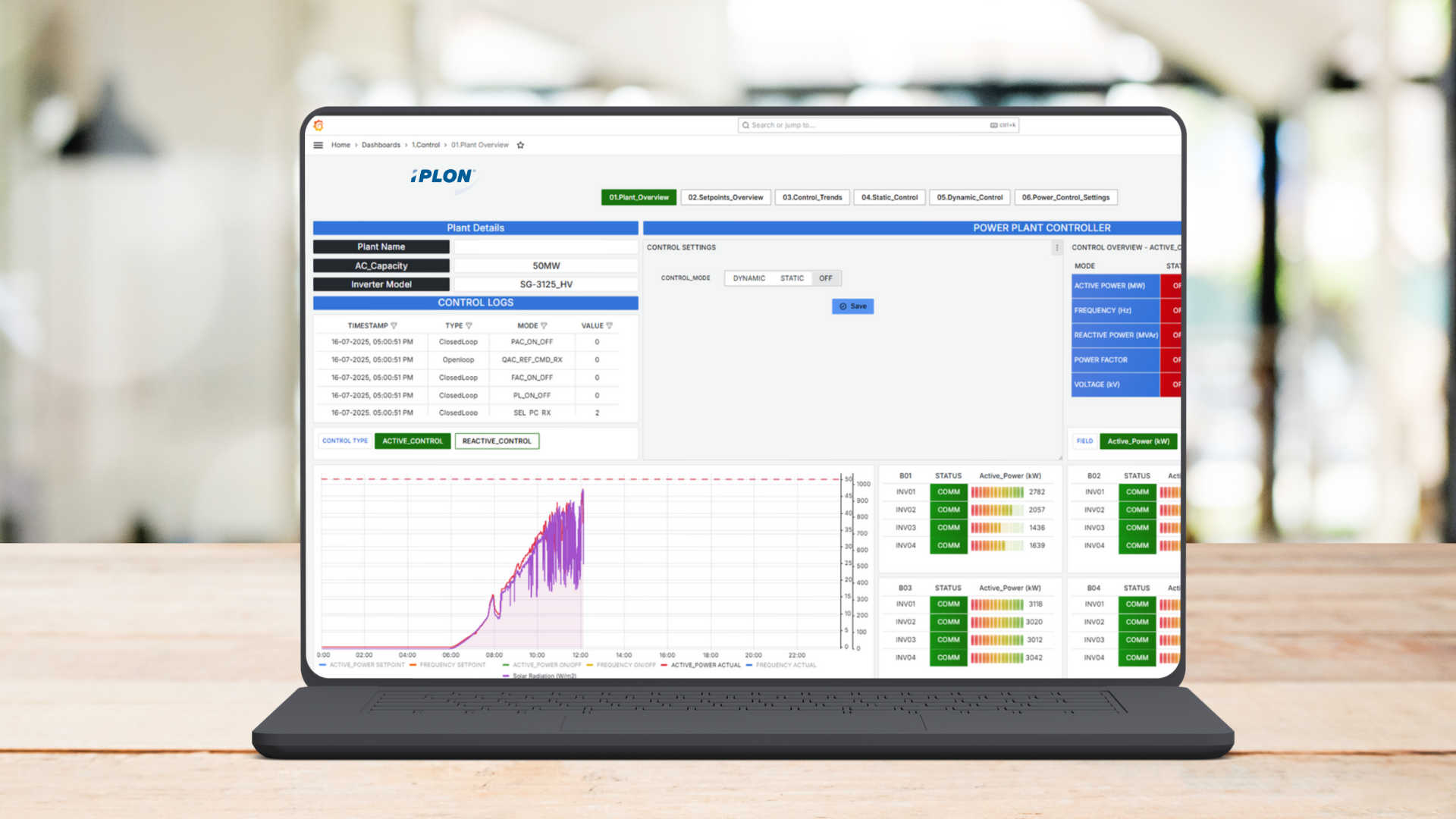
Key Features of PPC
Grid-Synchronized Command & Control for Utility Renewable Plants
iPLON PPC ensures disciplined, reliable, and fully compliant grid operations.
Hybrid / Master Power Plant Controller (HPPC / MPPC).
Centralized Master Control for Multi-Source Power Plants
Centralized Master Control for Multi-Source Power Plants
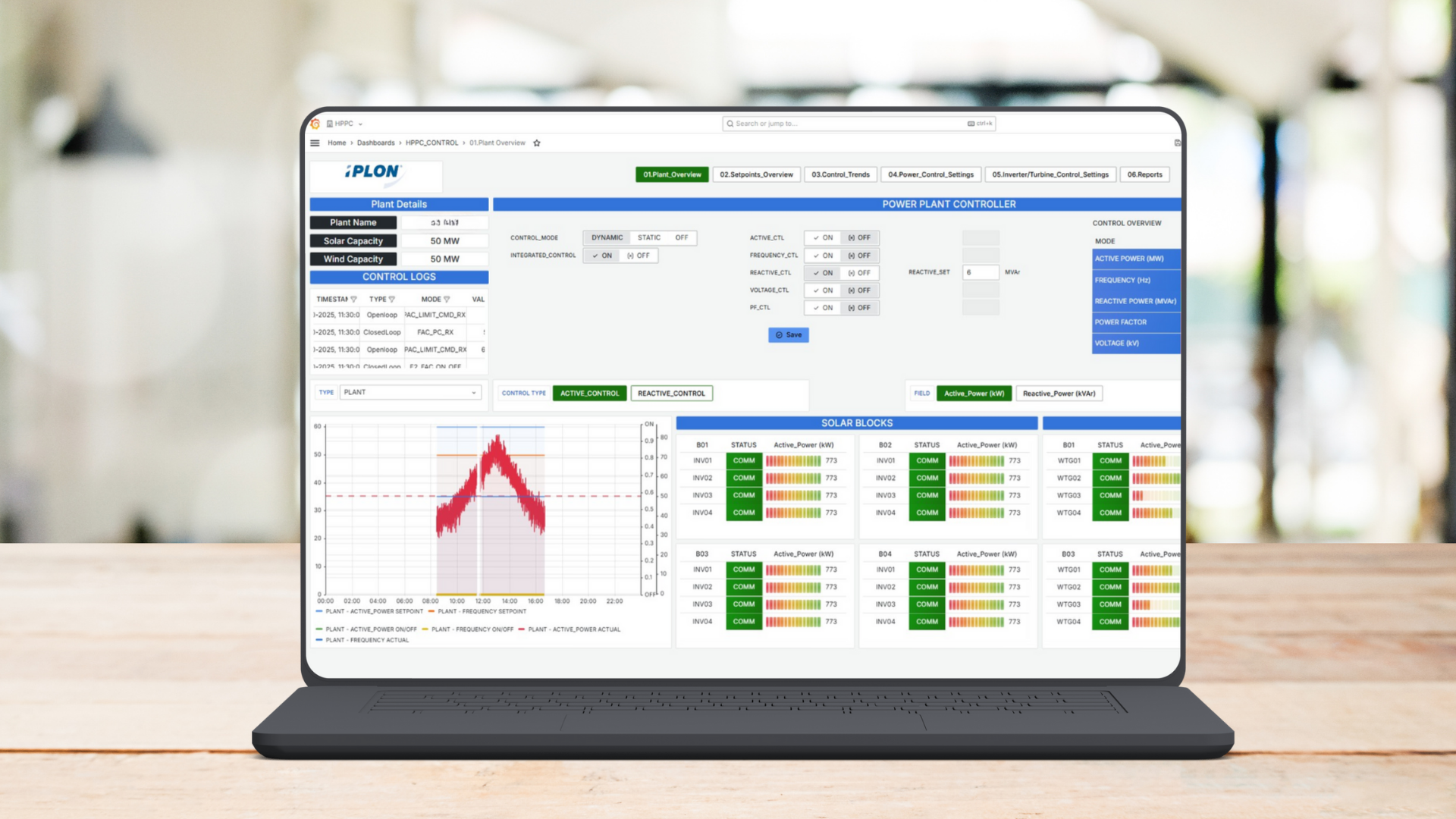
Hybrid / Master Power Plant Controller (HPPC / MPPC)
Coordinated Intelligence for Hybrid & RE+Storage Plants
HPPC (or MPPC) acts as the overall plant-level master controller, integrating solar, wind, battery storage, and grid-support assets (e.g. SVG) into a single, coordinated control platform. It ensures optimized dispatch, grid stability, and regulatory compliance across complex hybrid architectures.
Key Features of HPPC / MPPC
Coordinated Intelligence for Hybrid & RE + Storage Plants
Solar → Wind → Battery → SVG
HPPC ensures hybrid plants operate as a single compliant generating entity, not a collection of independent systems.
Powering Reliable Grid-Connected Renewables
Indigenously Developed | Built for Indian Grid Realities and Key Functionalities & Features
Indigenously Developed | Built for Indian Grid Realities
Designed for Indian grid behavior, variability, and renewable penetration challenges
Optimized for frequency fluctuations, voltage instability, and curtailment scenarios
Fully compatible with SLDC operational philosophies
Local engineering support and lifecycle services
Flexible and fully customizable control logic (no OEM lock-in)
Key Functionalities & Features
Full Grid Code Compliance
Active/reactive power, frequency, voltage, PF, ramp rate, droop control
FACTS Integration
Compatible with STATCOM/SVG
Flexible Architecture
Single master, multi-master, and slave system support
Validated Performance
Benchmarking reports & PSCAD validation models
Secure Operations
Role-based access via central workstation or HMI
Technical Excellence
Built for Hybrid, Storage-Integrated, and Next-Generation Grids
Compliance
CEA, SLDC, DISCOM regulations
Protocols
IEC 61850, IEC 60870-5-101/104, Modbus TCP/RTU, OPC UA
High Availability
Hot-standby redundancy & High Up-Time
Cybersecurity
IEC 62443-aligned, encrypted communication, access management, audit logs
Proven across large-scale Indian and international installations
Fully customizable, protocol-flexible logic (no OEM limitations)
Vendor-neutral integration with multi-OEM systems
Engineered for long-term operational stability and lifecycle performance
Unique Value Proposition (USP)
Unlike rigid OEM controllers, iPLON PPC and HPPC deliver fully customizable, protocol-agnostic, grid-ready intelligence
ensuring stability, compliance, seamless integration, and future-ready smart grid operations.